Posts

Personal Branding: lessons learned from product marketing (PART 2)

Image
In my first blog in this series, I explained the similarities between product branding and personal branding and how I learned that branding can help you promote your product and reach your goals. The first lesson was about using a goal-driven approach to branding. Lesson number 2 is about finding the right path between facts and suggestions when establishing your brand. Lesson 2: Stay close to the facts For a product marketer it is not very uncommon to introduce a product as the solution to everything. But once consumer reviews come back, a brand can easily be damaged if the product doesn’t meet with the expectations. The same is true for personal branding. If I promote myself as being an expert on java development and during my first project people find out that I have no clue what I am talking about, the value of my personal brand will drop immediately. On the other hand, branding is all about creating an image. An image that can be closer or further away from the cold f...

Personal Branding: lessons learned from product marketing (PART 1)

Image
Personal Branding is a hot item these days and there are already various blogs and articles written on this topic. But where does is come from, how should we use it and why is it so important? To answer these questions I want to go back to one of my former roles, being the product marketer at a software company. It is there that I have learned how branding can help you promote your product and reach your goals. Although product branding and personal branding seem to be two completely different things, there are a lot of similarities in my opinion. My lessons learned: Define your goal Stay close to the facts Be clear about your motives Don’t wait until tomorrow Keep your brand intact Lesson 1: Define your goal All marketing activities – branding included – are goal-driven activities. For a product supplier branding is a tool out of the marketing toolbox, not a goal. The goal is to sell the product, or more specific: reach new audiences to sell the product to. With ...

Smarter solutions for a better coffee making experience (Part 2)

Image
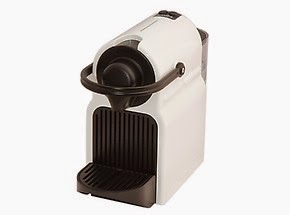
Let’s continue our exploration of the contextual intelligence domain and see how simple things in our everyday life could potentially be affected by this development. Our goal in this blog series is to design a context-sensitive, smart Nespresso Machine that can provide us with exactly the right cup of coffee at the right time and that can support us in performing simple maintenance activities. In my previous post we looked at the variables of preparing a cup of coffee with a Nespresso Machine: Brewing ratio: ristretto, espresso or lungo Additions: sugar / sweets, coffee milk / coffee milk powder, steamed / frothed milk Flavor Intensity Other important aspects like temperature and pressure were left out of the list, because they cannot be influenced with a setting on the machine. Relevant Context Variables So, what are the relevant context variables that influence our choice of coffee. In my opinion all of these variables can influence our choice: Taste Flavor / sm...

Smarter solutions for a better coffee making experience (Part 1)

Image
In one of my posts, about a month ago - I complained about the fact that my new Nespresso coffee machine was not able to assist me in performing simple coffee making tasks. The manual - of which the author probably has heard of minimalism but never actually read Carroll's books - didn't help much. These are the primary tasks of the machine: Preparing for first use Adjusting the water level Preparing coffee Emptying the system Resetting to factory defaults Setting the energy saving mode Descaling the machine Cleaning the machine Troubleshooting As exciting as all these tasks may be, there is only one that is really influenced by the context: Preparing coffee . Let's zoom in on this task and see how we can optimize our coffee making experience. The variables of a cup of coffee Assuming we use the Nespresso machine to prepare a cup of coffee, we can identify the following variables: Brewing ratio: ristretto, espresso or lungo Additions: sugar / sweets, cof...

Smart devices for cool people: We don’t need no documentation

Image
I have bought a new coffee machine this weekend. Not that the old machine stopped working, I just didn’t like its coffee anymore. The old coffee machine was one of those Senseo machines, very cool 10 years ago, but not really living up to the expectations when it came to the quality of the coffee. Plus that you really needed to apologize up front to visitors for having such an example of ancient technology in your kitchen. But then the new machine: it is cool, it is white, it is small and it makes excellent coffee. Even better: by buying it I became a member of an exclusive society of coffee enjoyers, amongst who George Clooney is probably the best known. So with high anticipation I unpacked the machine. First came the exclusive black menu card holder, containing a menu card with an overview of all the special flavors that were now within my reach and an invitation to become a member of this exclusive coffee drinkers club. Next came the starters set with 16 exclusive coffee cups...

An introduction to contextual intelligence

Image
Contextual intelligence is the practical application of knowledge and information to real-world situations. This is an external, interactive process that involves both adapting to and modifying an environment to accomplish a desired goal; as well as recognizing when adaptation is not a viable option. This is the ability that is most closely associated with wisdom and practical knowledge. It is the best predictor of success in real-life performance situations.” Charlie Brown PhD ( http://headinthegame.net ) It is inevitable that enterprises need to become more intelligent as they are facing increasing complexity, global competition, severe cost pressure, demanding stakeholders, constant change and uncertainty. An intelligent enterprise is social, high performing and future-resistant at the same time. To reach such a status, in my opinion enterprises need to  be able to systematically adapt knowledge, input from smart devices and data. The Internet of Things Current devel...

New iOS8: first steps in contextual intelligence

Image
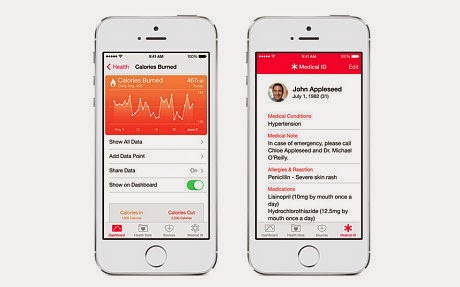
The new Healthkit app and the improved Siri in combination with HomeKit - introduced in the new Apple iOS 8 - are two perfect examples of how contextual intelligence enters our daily lifes. Although Healthkit seems to be focusing on monitoring, making it possible to share this data with your doctor, the next step could be that your phone advices you to go on a diet (or even tells you what to eat) or go to the hospital. Siri in combination with HomeKit is also interesting. If you tell Siri (your phone) that you go to sleep, the HomeKit system is able to switch off heatings, dim the lights and lock your doors. What I would find interesting to see is what happens if you add more context data to this system, like data from a video surveillance system in front of your door, or location data provided by your phone. Combine these with dynamic rules and you could have doors that automatically unlock in front of you and lights that follow you through your house (when it is dark). I have f...