Posts

Action requested: Please review

In case you missed it: I am writing a new article on Robotics. My writing process consists of the following steps: Set the goal, audience and context Prepare structure, overall storyline and title Write the first draft Review Publish After writing the draft (took me 30 minutes as I knew the storyline and title), I have now arrived in the phase in which I want my article to be reviewed. So here is the deal: I provide you with my draft article below and you will use the comments fields to provide me with feedback, encouragements, corrections and suggestions. Let’s go! Title: Why Every Great Leader Should Love Robotics (draft) I hate repetitive work. When I was a teenager, my two brothers and I had to do the dishes. On two out of every three days, I spent almost 30 minutes on something I hated instead of doing something more meaningful like reading a book, watching television or doing my homework. So how did I feel when my parents decided to buy a dishwasher? Was I afraid th...

Laying the foundation for an effective article

Image
In this series of articles you can follow my process in writing a new article on Robotics. In the  first episode  I explained my approach towards writing, the  second article  focussed on setting the goal, choosing an audience and finding the right approach. Now that we have a clear vision on goal, audience and approach, it is time to start setting up the structure. Writing requires a structured approach Writing is all about structuring your thoughts. And although this is a process that most of us do in a more implicit way, it sometimes helps - and is actually best practice - to write down your structure on a very high level. The goal of my article is to change the opinion of the reader towards accepting Robotics as a something that brings value to a business and motivates employees, rather than being limited to reducing FTE. So the structure of my article should be build up around the motives used to build up this case. As I want my article to be shor...

First steps towards an effective article on Robotics

Image
As mentioned in my previous article, writing is a structured, goal-driven activity. In order to get to an effective article, we need to make explicit choices: What is the goal of the article, what do we want to achieve? What is the target audience of the article? What is the context of our article? These choices help us in making the first sketch of our article. They will also influence our writing style, the level of detail and use of technical terminology. Setting the goal Those of you that have followed my articles on Personal Branding  know that I consider any form of professional communication as a goal-driven activity. An effective article supports in my opinion the author's branding and aims for one or more specific goals. These goals can be divided into three categories: Convincing the reader to perform an action. This can for instance be contacting you, ordering a product, signing up for a newsletter or visiting an event. Changing the opinion of the re...

This is just a Tribute

Image
“I wrote the first thing that came out of my head. It just happened to be, the best article in the world.” (Inspired by “The best song in the world” by Tenacious D.) The best articles in the world are shaped in our mind; we dream them, we think them through but we actually never write them. In the past I wrote several articles on Intelligent Automation and Robotics. The first of these series came easy, later on creating a new contribution started to become more and more of a struggle. It’s been more than 6 months since my last article and about time to write a new one. But where to start? And how to finish? In this blog series, I will guide you through my writing process, including my first drafts and potential revisions. How to write an article Writing is a structured, goal-driven activity. I have studied Linguistic Competence (The science of communication – in my case Writing) at University and I have learned the following activity plan: Define your goal Define your a...

No Humans Allowed: The Top 5 Pitfalls In Robotic Process Automation

Image
By using Robotic Process Automation (RPA), we are able to create a digital workforce. But how autonomous will this workforce be? And how can we manage such a workforce? For our rapidly growing organization, we are currently looking for claim handlers. Your work will be to ensure that insurance claims are handled efficiently and that payment for valid claims is made to their policyholders. You need to decide on the extent and validity of a claim, checking for any potential fraudulent activity and further process the claim. You will work 24 hours a day for 7 days a week and you will cost us 75% less than the workforce you will be replacing. RPA is shaping the workforce of the future Well, this is a job offer no robot can refuse. Robotic process automation (RPA) is quickly shaping the workforce of the future. Gartner  predicts that current RPA vendors will add more process or task-specific capabilities to their software, while in the meantime vendors in the process doma...

A robot took over my work… and I feel fine – Episode 2

Image
In my previous article I stated that I think that every single individual on this planet will be impacted by robotics. Of course for some individuals the impact will be larger than for others. I would personally welcome the help of a robot that could take over part of the administration that comes with my job. The robot in me Photo by: Matt Cooper (https://www.flickr.com/photos/matt_briston/) One of the things I do as NL Lead Automation for Accenture, is performing assessments at clients to figure out what processes could be automated. In most cases I simply sit next to a person that is performing a task, counting the activities and assessing the constraints in the process. In other cases, we receive videos or a report from an assessment tool. Could I - in this role - be replaced by a robot? I would say: yes. Can I design the robotic solution that replaces me? Yes, again. Would my clients benefit from a fully automated process?  I doubt so. The human in me Techn...

A robot took over my work… and I feel fine – Episode 1

Image
The title of this article sounds like the title of a rock song. It contains a contrast that represents the feeling a lot of people have when it comes to robotic process automation: Fear and acquiescence. Is Robotic Process Automation the new job killer? Or does is provide us with new opportunities and perhaps new jobs? There has been a lot of writing recently on how the rise of the robots will eliminate millions of jobs. According to World Economic Forum research, about 7 million jobs will be lost and 2 million gained as a result of technological change. Administrative and office jobs will account for two-thirds of the losses, with “routine white-collar office functions at risk of being decimated.” Impact on IT and BPO business Now let’s take a look at the business I am working in: IT and BPO. Analyst firm Horses for Sources has estimated the total impact of automation on IT/BPO Services Workers. Source: http://www.horsesforsources.com/indias-services-industry-set-to-los...

Robotic process automation: Do robots dream of a personalized world?

Image
To cope with the rising customer expectations of the current ‘click and buy’ generation, organizations need to offer their customers a highly personalized, context-driven experience. The required processing speed and complexity - combining data from various sources and devices - cannot be delivered by a human workforce alone anymore. Could Robotic Process Automation (RPA) bring organizations the level of contextual intelligence that is required to make the first step towards intelligent automation and fully customer centered products and services? Let’s explore.

Beat the typist: Robotic versus Intelligent Process Automation

Image
Rotating wheels are destiny, in flame the city lies. Machines call out for followers far out into the night. The calls of the machines drowning in the steam. (P-Machinery - Propaganda) The vision that the band Propaganda created in the 80's, with humans operated as puppets, comes close to the fear a lot of people still have when we are talking about robotics and the automation of processes. Despite this fear, robots and robotics are hot and the technology is advancing so fast that it is hard to keep track. With this blog I will give a brief introduction to two trends that I consider as leading in current process automation: 1. Robotic Process Automation (RPA) 2. Intelligent Process Automation (IPA) Robotic Process Automation (RPA) According to the Institute for Robotic Process Automation (IRPA) "Robotic Process Automation (RPA) is the application of technology that allows employees in a company to configure computer software or a “robot” to capture and interpre...

An Innovator’s Guide to Contextual Intelligence and Robotics

Image
I have an annual travel insurance. It is not that I travel a lot, but it gives me the flexibility to come and go whenever I want. It saves me the trouble of ordering a new travel insurance for every vacation and it guarantees me that I am always insured. You could say that it provides me with the suggestion of freedom to travel. But isn’t it strange that I need to take an annual insurance, just to avoid the hassle of ordering a new insurance every time I want to travel? And what about my coverage? Should I choose worldwide coverage just in case I want to travel outside of Europe? And why do I have to pay for the days that I am not traveling? I demand a personalized product that automatically adjusts itself too. And I only want to pay for what I use We are the ‘click and buy’ generation and these days, everything is getting personalized. In a series of articles on contextual intelligence and robotics, I want to give you insight in the state of the technology and it's appli...

Personal Branding: lessons learned from product marketing (PART 5)

Image
In the previous episodes of this blog series we have looked at the lessons I have learned on Product Branding during my days as a product marketer: Lesson 1: Define your goal Lesson 2: Stay close to the facts Lesson 3: Be clear about your motives Lesson 4: Don’t wait until tomorrow In this final episode of this series (for now), we are going to look at lesson 5: Keep your brand intact. This is based on the lessons I have learned on what works and what doesn’t work when your brand value is impacted by external factors like bad publicity. Lesson 5: Keep your brand intact Imagine yourself being the product marketer of  company that delivers business software. You have established a strong brand for your company and its products and you are planning to continue working on this brand. But then something happens that immediately impacts the value of your brand: one of your clients has published a rather negative article about your product. The article gets a lot of attenti...

Personal Branding: lessons learned from product marketing (PART 4)

Image
In the previous entries in this series, we have talked about setting a goal , the balance between facts and future and about expressing your motives . In this post we will look into the aspect of timing. Lesson 4: Don’t wait for tomorrow When you work as a product marketer for an innovative product manufacturer, one of the worst things that can happen is that one of your competitors positions its product exactly in the spot where you wanted your product to be. When it comes to branding you don’t want to brand your product as an alternative for your competitor’s product, which means you have to think of a whole new messaging structure. You want to be the original. In my work as a product marketer for a software supplier, I have always managed to avoid such a situation. Two aspects were important in this approach: our efforts were strongly goal-driven and we moved fast. Important in this approach was to keep an eye on both our competitors and our clients. On the competitor sid...

Personal Branding: lessons learned from product marketing (PART 3)

Image
In the previous entries in this series on personal branding, we have looked at the similarities between product branding and personal branding, learned the benefits of a goal-driven approach and defined the optimal balance between using facts and future developments in our personal brand. Lesson 3: Be clear about your motives As a product marketer I have worked for a company that used strong statements to set itself and its product apart from other software companies and its solutions. These included statements that could be seen as ambitious or even arrogant. The goal was obviously to show the world how innovative and ground-breaking our product was, but why would we take the risk to go as far as calling ourselves – our product – a revolution in IT? Think of lesson 2: the further you get away from the facts, the harder it is to live up to the expectations. On top of all this, people were wondering what the company’s motives were for this distinct type of branding. So the...

Personal Branding: lessons learned from product marketing (PART 2)

Image
In my first blog in this series, I explained the similarities between product branding and personal branding and how I learned that branding can help you promote your product and reach your goals. The first lesson was about using a goal-driven approach to branding. Lesson number 2 is about finding the right path between facts and suggestions when establishing your brand. Lesson 2: Stay close to the facts For a product marketer it is not very uncommon to introduce a product as the solution to everything. But once consumer reviews come back, a brand can easily be damaged if the product doesn’t meet with the expectations. The same is true for personal branding. If I promote myself as being an expert on java development and during my first project people find out that I have no clue what I am talking about, the value of my personal brand will drop immediately. On the other hand, branding is all about creating an image. An image that can be closer or further away from the cold f...

Personal Branding: lessons learned from product marketing (PART 1)

Image
Personal Branding is a hot item these days and there are already various blogs and articles written on this topic. But where does is come from, how should we use it and why is it so important? To answer these questions I want to go back to one of my former roles, being the product marketer at a software company. It is there that I have learned how branding can help you promote your product and reach your goals. Although product branding and personal branding seem to be two completely different things, there are a lot of similarities in my opinion. My lessons learned: Define your goal Stay close to the facts Be clear about your motives Don’t wait until tomorrow Keep your brand intact Lesson 1: Define your goal All marketing activities – branding included – are goal-driven activities. For a product supplier branding is a tool out of the marketing toolbox, not a goal. The goal is to sell the product, or more specific: reach new audiences to sell the product to. With ...

Smarter solutions for a better coffee making experience (Part 2)

Image
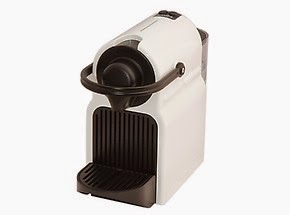
Let’s continue our exploration of the contextual intelligence domain and see how simple things in our everyday life could potentially be affected by this development. Our goal in this blog series is to design a context-sensitive, smart Nespresso Machine that can provide us with exactly the right cup of coffee at the right time and that can support us in performing simple maintenance activities. In my previous post we looked at the variables of preparing a cup of coffee with a Nespresso Machine: Brewing ratio: ristretto, espresso or lungo Additions: sugar / sweets, coffee milk / coffee milk powder, steamed / frothed milk Flavor Intensity Other important aspects like temperature and pressure were left out of the list, because they cannot be influenced with a setting on the machine. Relevant Context Variables So, what are the relevant context variables that influence our choice of coffee. In my opinion all of these variables can influence our choice: Taste Flavor / sm...

Smarter solutions for a better coffee making experience (Part 1)

Image
In one of my posts, about a month ago - I complained about the fact that my new Nespresso coffee machine was not able to assist me in performing simple coffee making tasks. The manual - of which the author probably has heard of minimalism but never actually read Carroll's books - didn't help much. These are the primary tasks of the machine: Preparing for first use Adjusting the water level Preparing coffee Emptying the system Resetting to factory defaults Setting the energy saving mode Descaling the machine Cleaning the machine Troubleshooting As exciting as all these tasks may be, there is only one that is really influenced by the context: Preparing coffee . Let's zoom in on this task and see how we can optimize our coffee making experience. The variables of a cup of coffee Assuming we use the Nespresso machine to prepare a cup of coffee, we can identify the following variables: Brewing ratio: ristretto, espresso or lungo Additions: sugar / sweets, cof...

Smart devices for cool people: We don’t need no documentation

Image
I have bought a new coffee machine this weekend. Not that the old machine stopped working, I just didn’t like its coffee anymore. The old coffee machine was one of those Senseo machines, very cool 10 years ago, but not really living up to the expectations when it came to the quality of the coffee. Plus that you really needed to apologize up front to visitors for having such an example of ancient technology in your kitchen. But then the new machine: it is cool, it is white, it is small and it makes excellent coffee. Even better: by buying it I became a member of an exclusive society of coffee enjoyers, amongst who George Clooney is probably the best known. So with high anticipation I unpacked the machine. First came the exclusive black menu card holder, containing a menu card with an overview of all the special flavors that were now within my reach and an invitation to become a member of this exclusive coffee drinkers club. Next came the starters set with 16 exclusive coffee cups...

An introduction to contextual intelligence

Image
Contextual intelligence is the practical application of knowledge and information to real-world situations. This is an external, interactive process that involves both adapting to and modifying an environment to accomplish a desired goal; as well as recognizing when adaptation is not a viable option. This is the ability that is most closely associated with wisdom and practical knowledge. It is the best predictor of success in real-life performance situations.” Charlie Brown PhD ( http://headinthegame.net ) It is inevitable that enterprises need to become more intelligent as they are facing increasing complexity, global competition, severe cost pressure, demanding stakeholders, constant change and uncertainty. An intelligent enterprise is social, high performing and future-resistant at the same time. To reach such a status, in my opinion enterprises need to  be able to systematically adapt knowledge, input from smart devices and data. The Internet of Things Current devel...

New iOS8: first steps in contextual intelligence

Image
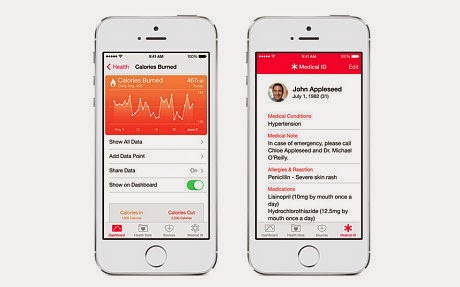
The new Healthkit app and the improved Siri in combination with HomeKit - introduced in the new Apple iOS 8 - are two perfect examples of how contextual intelligence enters our daily lifes. Although Healthkit seems to be focusing on monitoring, making it possible to share this data with your doctor, the next step could be that your phone advices you to go on a diet (or even tells you what to eat) or go to the hospital. Siri in combination with HomeKit is also interesting. If you tell Siri (your phone) that you go to sleep, the HomeKit system is able to switch off heatings, dim the lights and lock your doors. What I would find interesting to see is what happens if you add more context data to this system, like data from a video surveillance system in front of your door, or location data provided by your phone. Combine these with dynamic rules and you could have doors that automatically unlock in front of you and lights that follow you through your house (when it is dark). I have f...