Posts

Improve Product and Brand engagement through smart documentation

Image
There is no doubt that the introduction of semantic technology in documentation, will change the way we create our documentation. Increased product and brand engagement Figure 1. Happier users Smarter documentation will lead to happier users, who reach their goals faster and with less frustration. Documentation that exactly responds to individuals will enhance perception of the product and the brand. Although positive feedback travels less quickly on the social media than negative feedback, it will not only impact the product and brand engagement of current customers but also motivate potential customers to take a serious look at your product. It will also influence your image and reputation as a technical communicator in the market and the value you offer to your contractors or managers. In this perspective technical communication will become a profit center instead of a cost center.   Increased documentation engagement Figure 2. Continuity of work Lookin...

Documentation as a Service

A knowledge-based, semantically-modeled process can provide exactly the right result for end users and a powerfully effective tool for working teams in an organization. An additional benefit comes with the semantic solution for documentation: the ability to generate multiple output forms in multiple languages and addressed to different audiences from one set of models and content. User manuals, reference documentation, contextual help, in-context explanations, on-line user-assistance and complete inter- and intranet sites can be generated from one single repository, consisting of the relevant models and references to the content. Generating multiple documentation forms is one step in the process of providing documentation as a service. We can take it even one step further by integrating all these output forms in one smart user assistant. The smart user assistant adapts to events, answers questions, gives advice and assists in completing tasks. The key is computing with knowledge in t...

Model first, write later

Image
The use of models fits perfectly in the professional approach of creating user documentation: Define the goal, audience, and context: Clearly define the context, goals, and audiences. The design of documentation should be goal-driven—from the user’s point of view. Often, a brown paper or moderation session will help you define these goals and requirements. Involving users in this first step helps them understand the process and gives them an ownership stake in the solution. Create models of the goals, models and other important context factors and discuss them with the involved users. Analyze processes and activities: This is an important step in creating goal-driven documentation and should lead to a model of all relevant processes and activities. Also define the roles of different users within the processes.   Create the overall documentation model: this phase involves creating an overall structure for the product information, as well as linking this product model to the pr...

Using semantic technology in a model-driven environment

Image
Reaching a smarter form of documentation requires that we start to develop other strategies for displaying knowledge even as we change how we gather and store it. Among the solutions we can offer to accomplish this smarter form of documentation are combinations of non-hierarchical navigation, faceted navigation, decision trees, wizards, and faceted search. But first we have to break our habit of hierarchical structuring all our content in chapters, sections, and subsections. Many web sites, manuals and help systems share this structure: all content elements are sub-themes of an element on the preceding level. Figure 1. Many web sites, manuals and help systems are build up like a book with chapters, paragraphs and sub-paragraphs A hierarchical, structured approach is optimized for the most informed users: the developers and designers who created the product. The path it indicates would be the most direct route to becoming an expert user of the product. But for users who need to ...

The business case for smart documentation

Image
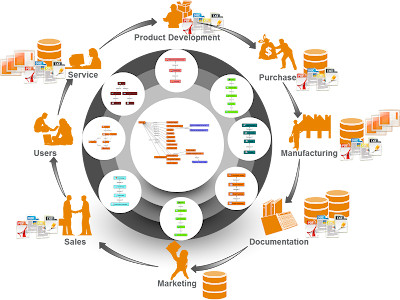
In my previous posts I have focused on the benefits of semantic technology in documentation for end users. Semantic technology also offers a great opportunity to support the documentation creation and revision process. Semantic technology replaces a disconnected, post-hoc documentation routine with a dynamic process that is easily deployed, tested, reviewed and revised. Every relevant stakeholder can be involved in the documentation process, as users and as authors. Smart documentation builds internal engagement for the organization in the same ways that it builds external engagement in the customer base. The modular re-use and incremental revision of documentation will reduce total cost of documentation. Support all parties in the product life cycle Using semantic technology in documentation makes it possible to optimize Product Life Cycle Management: It can support all documentation processes for all parties in the product life cycle. It also enables the re-use of information an...

From flexible content to digital knowledge

Image
Digital technology has allowed the documentation process to evolve from single document-centric to single source-centric: From creating individual manuals to creating re-usable chunks of information for a series of product and document types through various channels. Figure 1. Documentation evolved from document centric to single source centric Example A manufacturer of agricultural machines needed a complete line of documentation for its new type of harvester. In a document-centric approach, this would mean having one technical writer create the user documentation, another writer create the service manual and a third create the on-line help. In the best case they would copy chapters or paragraphs from one manual to the other. All of these documentation types would need to be reviewed by hand and individually updated when the harvester’s features changed, or new rules for its safe operation were implemented. In a single source environment, multiple writers work on discrete top...

Get documentation superpowers: Send me (a chapter of or instruction from) your documentation

As announced on several social media, I will demonstrate how we can use semantic technology to create process-driven documentation at the STC Summit 2013 in Atlanta.  I will do this by live modeling with a semantic tool set. Now I could do this with a predefined demo set, but what's the fun of that? So I would like to invite you to send a delimited instruction - this could be a chapter from one of your manuals - by uploading it to our server. From the uploaded manuals, I will select one or more to be modeled out.  As the models in the semantic environment are instantly executable, we can watch the documentation develop, change the models and review the results in a web browser. Wouldn't it be cool to see your documentation modeled out on the large screen at the STC Summit? When: May 6th, 2:00 pm (EDT) Where:   Hanover FG, Hyatt Regency Atlanta - Track my session Level: Advanced Uploading your file   Go to http://info.beinformed.com/stc13-upload a...