Posts

An Innovator’s Guide to Contextual Intelligence and Robotics

Image
I have an annual travel insurance. It is not that I travel a lot, but it gives me the flexibility to come and go whenever I want. It saves me the trouble of ordering a new travel insurance for every vacation and it guarantees me that I am always insured. You could say that it provides me with the suggestion of freedom to travel. But isn’t it strange that I need to take an annual insurance, just to avoid the hassle of ordering a new insurance every time I want to travel? And what about my coverage? Should I choose worldwide coverage just in case I want to travel outside of Europe? And why do I have to pay for the days that I am not traveling? I demand a personalized product that automatically adjusts itself too. And I only want to pay for what I use We are the ‘click and buy’ generation and these days, everything is getting personalized. In a series of articles on contextual intelligence and robotics, I want to give you insight in the state of the technology and it's appli...


Personal Branding: lessons learned from product marketing (PART 5)

Image
In the previous episodes of this blog series we have looked at the lessons I have learned on Product Branding during my days as a product marketer: Lesson 1: Define your goal Lesson 2: Stay close to the facts Lesson 3: Be clear about your motives Lesson 4: Don’t wait until tomorrow In this final episode of this series (for now), we are going to look at lesson 5: Keep your brand intact. This is based on the lessons I have learned on what works and what doesn’t work when your brand value is impacted by external factors like bad publicity. Lesson 5: Keep your brand intact Imagine yourself being the product marketer of  company that delivers business software. You have established a strong brand for your company and its products and you are planning to continue working on this brand. But then something happens that immediately impacts the value of your brand: one of your clients has published a rather negative article about your product. The article gets a lot of attenti...

Personal Branding: lessons learned from product marketing (PART 4)

Image
In the previous entries in this series, we have talked about setting a goal , the balance between facts and future and about expressing your motives . In this post we will look into the aspect of timing. Lesson 4: Don’t wait for tomorrow When you work as a product marketer for an innovative product manufacturer, one of the worst things that can happen is that one of your competitors positions its product exactly in the spot where you wanted your product to be. When it comes to branding you don’t want to brand your product as an alternative for your competitor’s product, which means you have to think of a whole new messaging structure. You want to be the original. In my work as a product marketer for a software supplier, I have always managed to avoid such a situation. Two aspects were important in this approach: our efforts were strongly goal-driven and we moved fast. Important in this approach was to keep an eye on both our competitors and our clients. On the competitor sid...

Personal Branding: lessons learned from product marketing (PART 3)

Image
In the previous entries in this series on personal branding, we have looked at the similarities between product branding and personal branding, learned the benefits of a goal-driven approach and defined the optimal balance between using facts and future developments in our personal brand. Lesson 3: Be clear about your motives As a product marketer I have worked for a company that used strong statements to set itself and its product apart from other software companies and its solutions. These included statements that could be seen as ambitious or even arrogant. The goal was obviously to show the world how innovative and ground-breaking our product was, but why would we take the risk to go as far as calling ourselves – our product – a revolution in IT? Think of lesson 2: the further you get away from the facts, the harder it is to live up to the expectations. On top of all this, people were wondering what the company’s motives were for this distinct type of branding. So the...

Personal Branding: lessons learned from product marketing (PART 2)

Image
In my first blog in this series, I explained the similarities between product branding and personal branding and how I learned that branding can help you promote your product and reach your goals. The first lesson was about using a goal-driven approach to branding. Lesson number 2 is about finding the right path between facts and suggestions when establishing your brand. Lesson 2: Stay close to the facts For a product marketer it is not very uncommon to introduce a product as the solution to everything. But once consumer reviews come back, a brand can easily be damaged if the product doesn’t meet with the expectations. The same is true for personal branding. If I promote myself as being an expert on java development and during my first project people find out that I have no clue what I am talking about, the value of my personal brand will drop immediately. On the other hand, branding is all about creating an image. An image that can be closer or further away from the cold f...

Personal Branding: lessons learned from product marketing (PART 1)

Image
Personal Branding is a hot item these days and there are already various blogs and articles written on this topic. But where does is come from, how should we use it and why is it so important? To answer these questions I want to go back to one of my former roles, being the product marketer at a software company. It is there that I have learned how branding can help you promote your product and reach your goals. Although product branding and personal branding seem to be two completely different things, there are a lot of similarities in my opinion. My lessons learned: Define your goal Stay close to the facts Be clear about your motives Don’t wait until tomorrow Keep your brand intact Lesson 1: Define your goal All marketing activities – branding included – are goal-driven activities. For a product supplier branding is a tool out of the marketing toolbox, not a goal. The goal is to sell the product, or more specific: reach new audiences to sell the product to. With ...

Smarter solutions for a better coffee making experience (Part 2)

Image
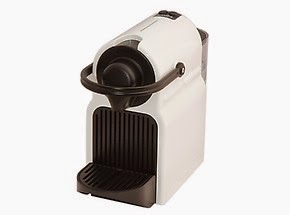
Let’s continue our exploration of the contextual intelligence domain and see how simple things in our everyday life could potentially be affected by this development. Our goal in this blog series is to design a context-sensitive, smart Nespresso Machine that can provide us with exactly the right cup of coffee at the right time and that can support us in performing simple maintenance activities. In my previous post we looked at the variables of preparing a cup of coffee with a Nespresso Machine: Brewing ratio: ristretto, espresso or lungo Additions: sugar / sweets, coffee milk / coffee milk powder, steamed / frothed milk Flavor Intensity Other important aspects like temperature and pressure were left out of the list, because they cannot be influenced with a setting on the machine. Relevant Context Variables So, what are the relevant context variables that influence our choice of coffee. In my opinion all of these variables can influence our choice: Taste Flavor / sm...