Posts

Old Tech - New Tech

Image
Sometimes you need to fall back on the oldest technologies available to get the most out of the latest and greatest. This is also true when developing smart documentation. My current project involves the creation of a smart documentation solution for the Be Informed Business Process Platform (BPP). The documentation solution is targeted at users with various educations levels, different skills and experiences and with various roles in an organization or project. And to make things even more complex: the total set of documentation should at least cover all current versions of the BPP, the business solutions that are used on top of it and the implementation and project management methods used during implementation. Preparation  As mentioned in my white paper about creating smart documentation, the preparation for a smart documentation project - before writing the content - consists of the following steps: Define the goal, audience, and context: Clearly define the context, g...

Smart documentation revisited

Image
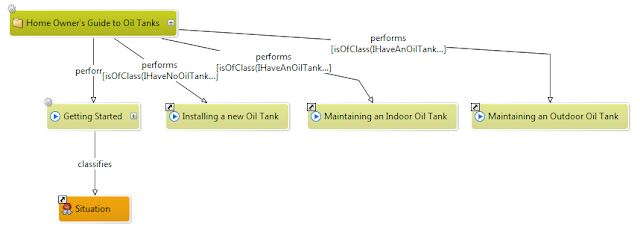
At the STC Summit 2013 in Atlanta, I demonstrated how we can create smart documentation by using semantic technology. The session was well visited and there were a lot of good questions. During the session I modeled live - together with the audience - on a smart maintenance manual for oil tanks. To me - being from a country where we don't know or use these kind of tanks next to our houses - this felt like the ultimate example, completely relying on the expertise of my audience. The demo The starting point was a very basic procedure, consisting of four main activities: In the first step we determine the situation. We start with a short situation description and then - instead of describing what possible situations there are and linking to the pages - we ask our users about their situation. As it is not relevant for people that don't own an oil tank yet to read the maintenance instructions, the first question we ask is whether or not the reader actually owns an oil tan...

Improve Product and Brand engagement through smart documentation

Image
There is no doubt that the introduction of semantic technology in documentation, will change the way we create our documentation. Increased product and brand engagement Figure 1. Happier users Smarter documentation will lead to happier users, who reach their goals faster and with less frustration. Documentation that exactly responds to individuals will enhance perception of the product and the brand. Although positive feedback travels less quickly on the social media than negative feedback, it will not only impact the product and brand engagement of current customers but also motivate potential customers to take a serious look at your product. It will also influence your image and reputation as a technical communicator in the market and the value you offer to your contractors or managers. In this perspective technical communication will become a profit center instead of a cost center.   Increased documentation engagement Figure 2. Continuity of work Lookin...

Documentation as a Service

A knowledge-based, semantically-modeled process can provide exactly the right result for end users and a powerfully effective tool for working teams in an organization. An additional benefit comes with the semantic solution for documentation: the ability to generate multiple output forms in multiple languages and addressed to different audiences from one set of models and content. User manuals, reference documentation, contextual help, in-context explanations, on-line user-assistance and complete inter- and intranet sites can be generated from one single repository, consisting of the relevant models and references to the content. Generating multiple documentation forms is one step in the process of providing documentation as a service. We can take it even one step further by integrating all these output forms in one smart user assistant. The smart user assistant adapts to events, answers questions, gives advice and assists in completing tasks. The key is computing with knowledge in t...

Model first, write later

Image
The use of models fits perfectly in the professional approach of creating user documentation: Define the goal, audience, and context: Clearly define the context, goals, and audiences. The design of documentation should be goal-driven—from the user’s point of view. Often, a brown paper or moderation session will help you define these goals and requirements. Involving users in this first step helps them understand the process and gives them an ownership stake in the solution. Create models of the goals, models and other important context factors and discuss them with the involved users. Analyze processes and activities: This is an important step in creating goal-driven documentation and should lead to a model of all relevant processes and activities. Also define the roles of different users within the processes.   Create the overall documentation model: this phase involves creating an overall structure for the product information, as well as linking this product model to the pr...

Using semantic technology in a model-driven environment

Image
Reaching a smarter form of documentation requires that we start to develop other strategies for displaying knowledge even as we change how we gather and store it. Among the solutions we can offer to accomplish this smarter form of documentation are combinations of non-hierarchical navigation, faceted navigation, decision trees, wizards, and faceted search. But first we have to break our habit of hierarchical structuring all our content in chapters, sections, and subsections. Many web sites, manuals and help systems share this structure: all content elements are sub-themes of an element on the preceding level. Figure 1. Many web sites, manuals and help systems are build up like a book with chapters, paragraphs and sub-paragraphs A hierarchical, structured approach is optimized for the most informed users: the developers and designers who created the product. The path it indicates would be the most direct route to becoming an expert user of the product. But for users who need to ...

The business case for smart documentation

Image
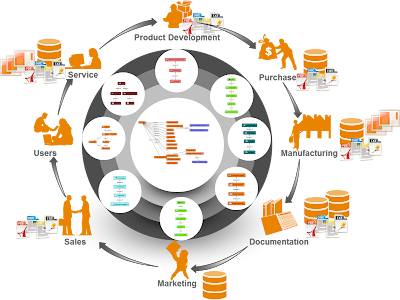
In my previous posts I have focused on the benefits of semantic technology in documentation for end users. Semantic technology also offers a great opportunity to support the documentation creation and revision process. Semantic technology replaces a disconnected, post-hoc documentation routine with a dynamic process that is easily deployed, tested, reviewed and revised. Every relevant stakeholder can be involved in the documentation process, as users and as authors. Smart documentation builds internal engagement for the organization in the same ways that it builds external engagement in the customer base. The modular re-use and incremental revision of documentation will reduce total cost of documentation. Support all parties in the product life cycle Using semantic technology in documentation makes it possible to optimize Product Life Cycle Management: It can support all documentation processes for all parties in the product life cycle. It also enables the re-use of information an...